Showing posts with label ESAC. Show all posts

Thursday, 1 February 2018

Super blue moon

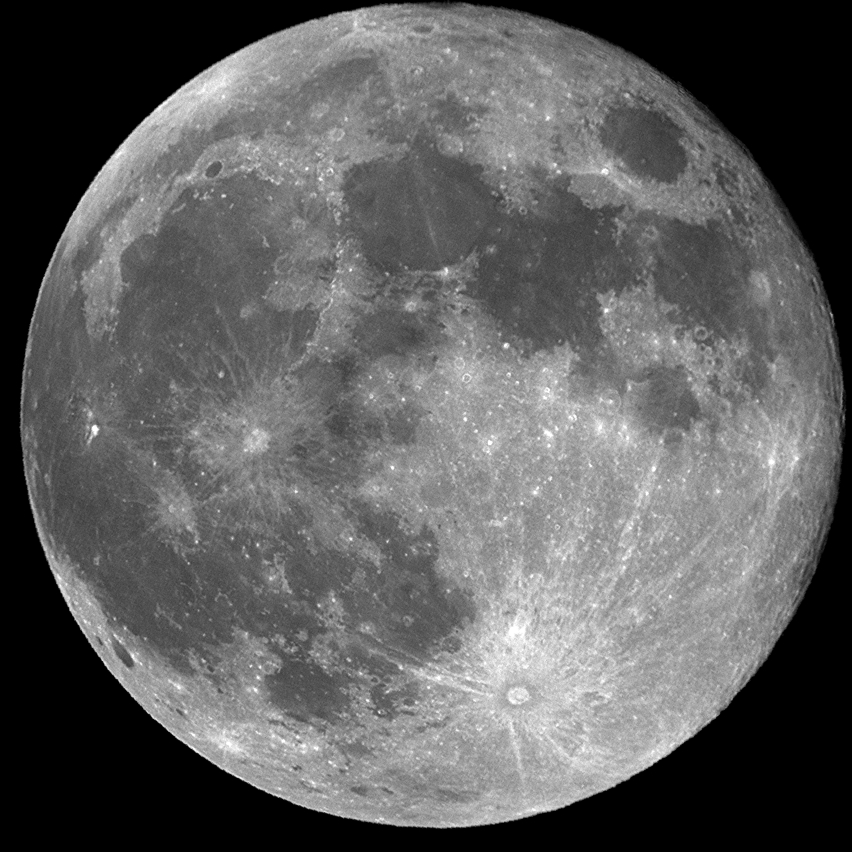
On Jan 31st we observed the full Moon from ESAC (European Space Astronomy Center). This moon was special and widely announced in the media, as it was a blue moon (second of the month), a super moon (at perigee) and a blood moon (eclipse). Unfortunately the eclipse was not visible from Madrid.

Super blue Moon, 31 Jan 2018, from ESAC
So we modified the day-time CESAR solar telescopes set-up such that we could follow the Moon. It was also an important observation, as we succeeded in the first live streaming with the telescopes.

The telescope is the top one (visible light). Filter was removed.

Monday, 22 May 2017

Plane crossing the Sun


The ESAC Helios Solar observatory captures from time to time objects crossing the Sun disk. In this case, a plane crossed the Sun. The image was taken on Wednesday 26th April 2017 at 10:48:43 Madrid time from the ESAC Helios Solar observatory. Image in H-alpha band (665nm wavelenght) showing the hydrogen emission from the Sun's chromosphere layer. The active regions around two sunspots groups are visible in the image.

Image credit: CESAR Educational team. 

Friday, 10 February 2017

ISS and the Moon over ESAC

On Saturday 14th 2017 the International Space Station ISS crossed the disk of the Moon as seen from the European Space Astronomy Center, ESAC. 

ISS crosses the Moon video

The image is a superposition of thirteen consecutive frames captured on 14th January at 02:01:14. The phenomena is extremely fast: the ISS took only 0.56 seconds to cross the moon disk! Therefore careful location/timing planning was required to successfully capture it. The ISS was in Earth's shadow, so its black silhouette is clearly seen against the bright background of the Moon surface.


ISS crosses the Moon

ISS-Moon crossings are common, but a crossing from a specific location on Earth is not. The observer, the ISS and the Moon must be precisely aligned. The ISS is the largest man-made object in orbit, spanning the size of a football pitch. Despite its large size, it orbits the Earth at a distance of approximately 400 km, therefore looking tiny to telescope fanatics. Depending on the ISS orbit altitude and the Moon elevation over the horizon, our natural satellite is at least 30-40 times bigger than the man-made station. The geometry is so particular that the ground path where observers can see the event is only a few hundred meters wide. Therefore careful planning of the observation must be performed. The station flies at ~27000km/h therefore the transit takes is a blink of an eye to be complete.
An ESAC group composed of Michel Breitfelner, Manuel Castillo, Abel de Burgos and Miguel Perez Ayucar set up two telescopes with two Canon reflex cameras in the back of the A-building, in the freezing night. The ISS, being in Earth's shadow, cannot be spotted before the crossing, so the observation is done with a clock in hand, and basically in the blind. Everything was right at the precisely expected time. The outcome was awesome: seen a fast dark spot carrying astronauts, flying cross the Moon.


Saturday, 16 November 2013

A plane crossing the Sun

A plane flying over the European Space Astronomy center, ESAC, in Madrid, was captured in this h-alpha image of the Sun, on 06-Nov-2013.


The images were acquired with a Coronado SolarMaxII-90 BF30 from the ESAC solar observatory Helios, by Elena Leiva. Real time solar images (weather permitting) are posted in http://www.sciops.esa.int/SB/VENUSEXPRESS/include/sun_monitor.html.

Wednesday, 14 March 2012

2012-03-14: Venus Jupiter conjunction - The Planetary Party II

The Planetary Party was held at ESAC after sunset, on 14th March 2012. Venus and Jupiter came closest in a conjunction about 3.5deg apart. Around 30 people gathered around the telescopes to watch the beautiful show.


Venus and Jupiter setting during the ESAC Planetary Party.


Mounting the telescopes before the ESAC Planetary Party.


Venus, the jewel of the night, was seen as a magnificent bright beacon, outshining any other star or planet in the sky.


Jupiter seemed to the naked eye a mere companion of Venus in their diving beyond the horizon, over the Aulencia castle. But through the telescope he showed its might. For a good reason he is the king of the planets.


Mars could be seen in the Eastern sky, with a remarkable reddish hue showing clearly the northern polar cap. Mars raised high in the sky during the night, chasing its companions. He did not to want to miss the show.


The party finished with the farewell of the most prominent object of the winter sky: M42, the Orion Nebula. The images were captured during the observation in order to shown the chromatic richness of this nebula. Visually through the telescope it is perceived as a diffuse but structured greenish area.

Friday, 24 June 2011

Eclipse Total de Luna (15 junio 2011) en ESAC

Con motivo del eclipse total de Luna que se produjo el 15 de junio de 2011 pasado a las 21:20 aproximadamente, el Club de Astronomía de ESAC organizó una pequeña observación convocando a todos sus miembros y amigos, y especialmente al staff de ESAC. Aunque la participación fue más reducida que ha que ha habido en otros 'Star Parties' anteriores, acudieron en total unas 25-30 personas a disfrutar del evento.


La observación se realizó desde la zona del aparcamiento de visitantes de ESAC, situado en el interior del recinto del centro, al lado de la antena de SMOS. Esta zona es un poco más baja que la tradicional colina de la antigua antena 'up-link' de IUE, a la que no se puede acceder en estos momentos pues se construye el nuevo edificio de usos múltiples de ESAC. Por esta razón no pudimos observar la Luna desde su salida, ya en el eclipse total, hasta que no alcanzó altura suficiente sobre el horizonte, aproximadamente a las 22:20 hrs de tiempo local. La salida de la Luna en Madrid se produjo por el horizonte SE (120 grados de azimut aproximadamente) a las 21:44 hrs.


A pesar de las limitaciones, el espectáculo fue maravilloso, pudiendo observarse perfectamente gran parte del eclipse total hasta las 23:00 hrs aproximadamente, momento en el que la Luna entró en la zona de penumbra. No obstante, mientras observabamos la Luna con los diversos telescopios montados para la ocasión, entre ellos el Celestron del Club, pudimos tambien echar un buen vistazo al otro gran espectáculo de la noche y de todas estas noches de verano, Saturno, con sus maravillosos anillos, ahora ya perfectamente visibles, y sus lunas cercanas.


A lo largo de la observación que se extendió hasta las 00.00 hrs aproximadamente, nuestro compañero de trabajo y amigo Rafael León tomó algunas fotos, que amablemente nos ha cedido para poder dejar constancia del evento. Muchas gracias Rafael.