For the observation of the total lunar eclipse of next February, 21th 2008 eclipse, we are participating in a coordinated observation of the total lunar eclipse of Next February, 21th 2008 from SouthAmerica and Western Europe.
The main data of the eclipse is shown below:
- All the eclipse will be visible from both Western Europe and South America.
- It is the last total lunar eclipse in the next 7 years which is visible in its integrity from South America.
- It is the last total lunar eclipse in the next 6 years which is visible in its integrity from Western Europe.
- Before the eclipse, the Moon will pass between two bright stars: Regulus (Mg. 1,41) y 31 Leonis (Mg. 4,4).
These characteristics permit the development of two interesting activities using simultaneous observations from Europe and South-America:
- The production of a 3D video of all the eclipse combining images taken from both hemispheres. It could be the first times it is produced.
- Using the two bright stars and the Moon imaged from both hemispheres, estimation of the Moon-Earth distance by means of the measurement of the Moon paralax. It has a similar educational value than the determination of the astronomical unit by means of the Venus transit.
Complementary activities are:
- Timing of the five penumbra and umbra limb contacts.
- Timing of the umbra immersions and emersions of certain surface features.
- Timing of star ocultations during totality.
- Monitoring of possible Lunar transitory effects during the totality and the final phase of the penumbra.
Interested people from South America have been invited through Cielo Sur, an
argentinian amateur astronomy webpage. Also personal invitations will be adressed. From Europe, the
Astronomic Group of Madrid with some people of the
ESAC astronomy club will be involved in this activity together with other teams from Spain. As observing from only one region the weather can be a problem, we have contacted teams observing from other parts of Western Europe to assure as possible the imaging of the eclipse from this hemisphere. So, ESOC & ESTEC astronomy clubs have been invited despite they have not the best weather during February.
As outputs of this activity and with credit to all the participants, it is expected to produce a stereoscopic video of the eclipse, a report gathering all the provided results and educational material for a practical Earth-Moon distance calculation.
Amateur astronomers from everywere in the visibility area are specially encouraged to participate in this event. Everybody can participate in this observation using from small binoculars to large size telescopes. A guide with details of all the observable phenomena is available
here.
The main coordinator of the activities and the main author of the observation field guide is
Alberto Martos. He is an experienced Moon explorer. He worked in the
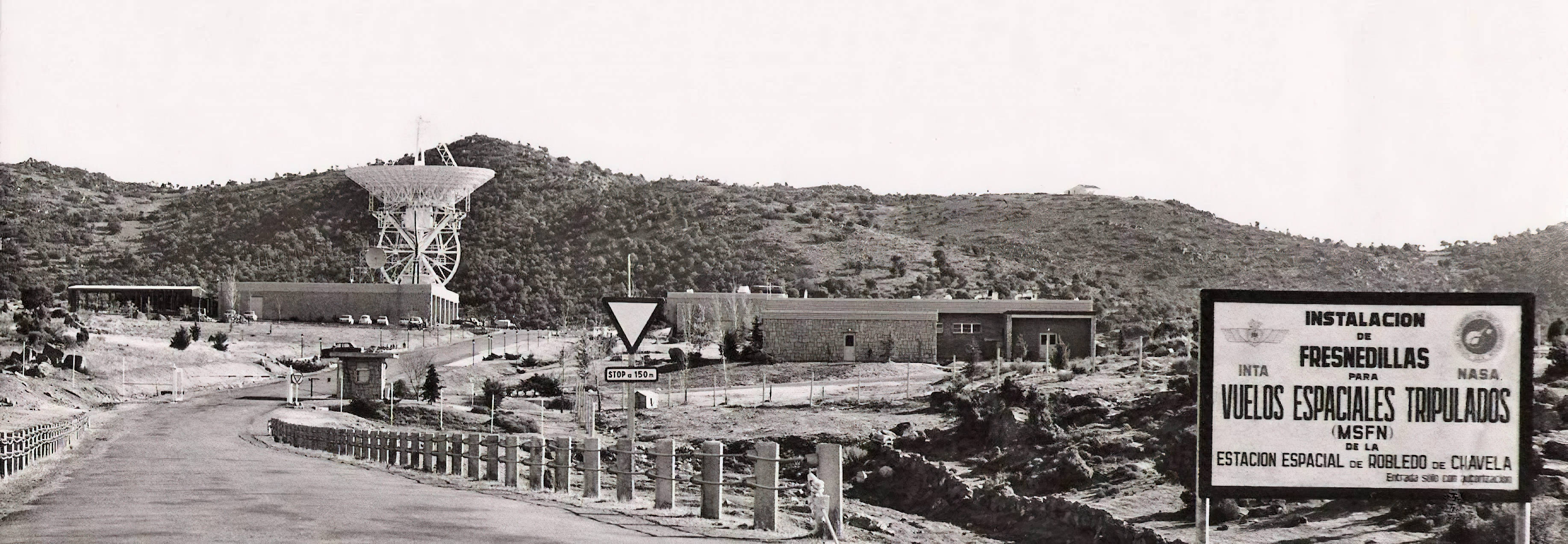
Madrid ground control of the Apollo missions (XIV-XVII) and Skylab and worked in
VILSPA until his retirement last year in the mission control of different ESA missions (IUE, ISO and XMM). At present, he is member of the
Astronomic Group of Madrid.
 The first picture was posted in Cielo Sur in answer to the coordinated observation by Leonardo Julio, Alejandro Tombolini and Adriana Fernández from Arenales y Agüero, Capital Federal, Argentina . It was captured with a Meade LX 90 telescope and an Olympus Evolt E-500 camera (provided by Silvia Smith). The second image was captured from Majadahonda (Madrid) by Manuel Castillo using a 9 cm/F10 Matsukov-Cassegrain Telescope and a Canon400D camera at 01:56 GMT. It was selected identifying the corresponding stereoscopic pair in a sequence covering all the Moon immersion in the Earth Shadow. Alignment and scaling was performed using conventional image processing techniques.


 Posts
Posts